By Baozar Zakariyyah
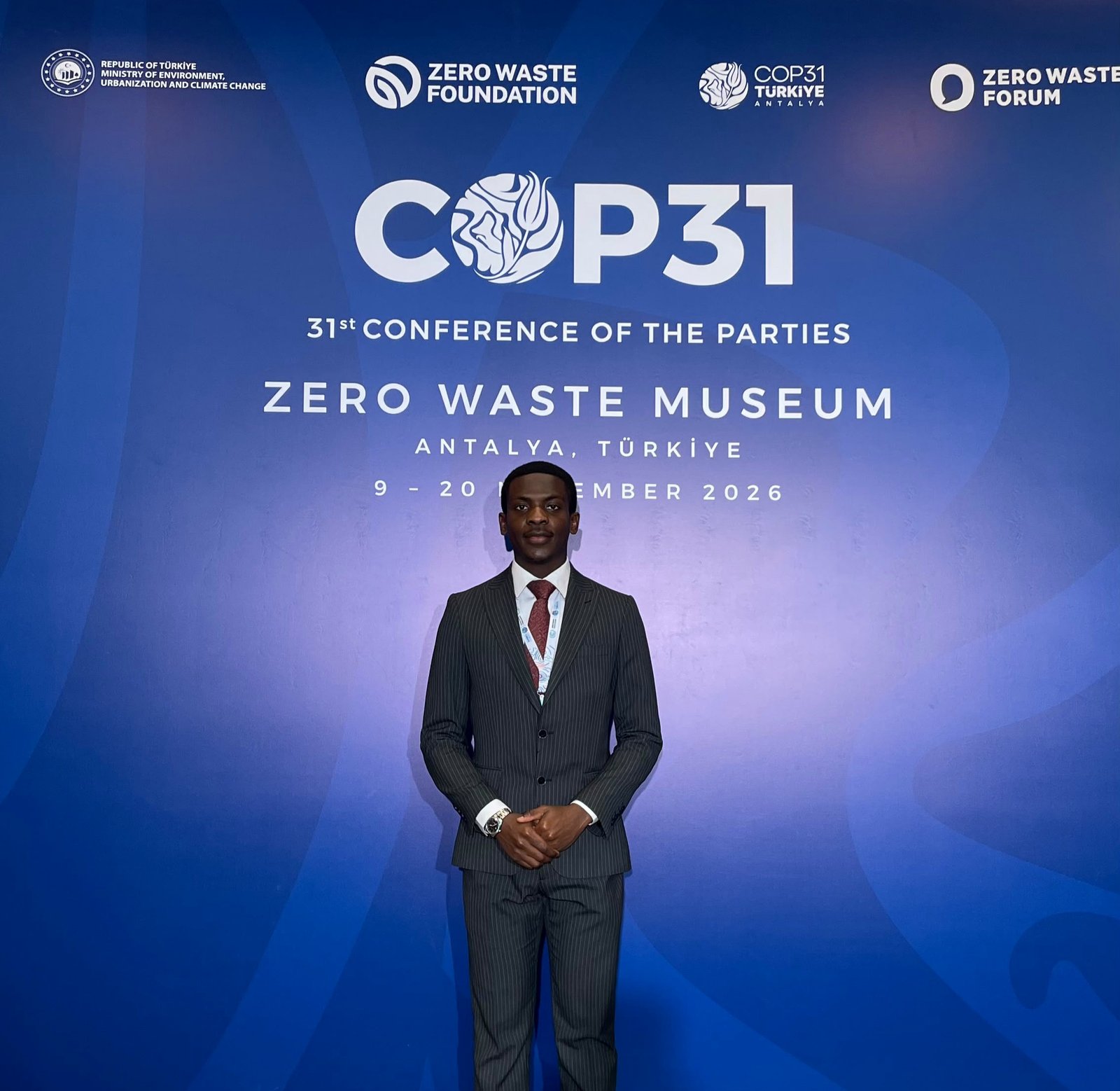
Attending a global climate summit that runs continuously for two full weeks is truly a once-in-a-lifetime opportunity. COP 31 has just run in Antalya (9–20 November 2026), and COP 32 is scheduled to take place in Addis Ababa, Ethiopia, from 8–19 November 2027. If you are planning to attend or get involved, now is the time to start preparing.
While the main aim of COP is for countries to negotiate and make high-stakes decisions that affect our climate and our planet, there is so much more happening on the sidelines. Beyond the formal negotiation rooms, the conference is buzzing with energy:
- Interactive panels and live debates
- Climate investments, sponsorships, and funding opportunities
- New partnerships and official MoU signings
- Art exhibitions, photography, and global media storytelling
- Innovation competitions and plenty of conference freebies
Because so much happens at once, the venue is divided into dedicated pavilions and hubs built for every kind of changemaker, including:
- Science and Tech Hub
- Resilient Cities Hub
- Youth Hub & Pavilion
- StartUps Hub
- Business Forum Hub
- Corporate Hub
- Zero Waste Hub
- Dining and Kitchen Hub
- Children’s Hub
- Art Hub
- Butterfly Hub (and many more)
Whether you are tracking negotiations, looking for a fully funded trip as a volunteer, seeking observer accreditation, looking to plug into one of these hubs, or joining youth advocacy networks, start with these core portals across the UNFCCC, the broader United Nations system, and official UN youth constituencies.
1. Official UNFCCC & Host Country Links
The United Nations Framework Convention on Climate Change (UNFCCC) manages the official negotiation process, observer accreditation, and pre-session documents:
- UNFCCC Main Portal: The central hub for all climate negotiation tracks, press releases, and session calendars.
- COP31 Session Page: The official agenda, schedule, and documents for Antalya.
- COP32 Dates & Venue Decision: Proposed decision text (FCCC/CP/2025/L.13) setting Addis Ababa, 8–19 November 2027, and asking the UNFCCC secretariat to agree a Host Country Agreement.
- UNFCCC Action for Climate Empowerment (ACE) & Youth: Details on how young people engage in UNFCCC conferences, including High-Level Youth Briefings, Young and Future Generations Day, and intersessional meetings (SBs) in Bonn.
- UNFCCC Events Calendar: Tracks upcoming workshops, mandated events, and preparatory sessions leading up to November 2027.
- COP32 Addis Ababa Host Portal: The Ethiopian host presidency portal for updates on logistics, thematic priorities, and local announcements. (Note: Keep an eye on unfccc.int as well, where the dedicated UNFCCC COP32 session page will appear closer to the conference. It was not yet live on 22 November 2026.)
2. COP31 in Antalya: What Happened
Final decision texts were still being published on 22 November 2026. The adopted decisions will be posted on the COP31 session page; these are the official sources to read now:
- Road to Antalya: The presidencies’ communications to Parties and observers.
- Draft Cover Decision (16 Nov version): A draft, so check the COP31 page for the final adopted text.
- Global Climate Action at COP 31: The Marrakech Partnership programme of business, city, and civil-society events.
- ACE and Children & Youth Events at COP 31: Education, awareness, and youth sessions.
- Co-Chairs’ Summary, March 2026 Heads of Delegation Meeting: What the COP31 presidencies set out to achieve.
- COP30 Belém Package: The baseline decisions COP31 had to implement.
- COP30 Presidency Executive Report: The Belém roadmaps and next steps.
- Baku to Belém Roadmap to $1.3T: The climate finance roadmap, with its first implementation update due at COP31.
3. COP32 in Addis Ababa: What We Know
- Dates and Host Decision: Accepts Ethiopia’s offer to host COP32 in Addis Ababa.
- Mid-2027 Negotiating Session: The dates text points to the June 2027 subsidiary bodies session as a milestone for host preparations.
- UN Climate Change and Ethiopia Joint Statement: Issued at Climate Week in Addis Ababa, where Ethiopia announced its COP32 bid.
- Presidency Youth Climate Champion Work Plan: Links youth innovation to the COP31 and COP32 Action Agenda.
- Global Climate Action Agenda 2026–2030: The five-year vision that will shape the COP32 action programme.
- 2026 High-Level Champions Work Programme: How the Champions plan to deliver it.
- COP30 Belém Package: Includes the adaptation indicator work that carries into a “Belém–Addis vision” process ahead of COP32.
4. How to Get Into the Room
UNFCCC conferences are not open to the public: you attend inside a government delegation or through an organisation admitted as an observer, which registers its own delegates.
- How to Obtain Observer Status: Admission is a one-off process, and UN ECOSOC status does not replace it. Check its FAQ on eligibility, which matters for companies and startups.
- Admitted IGOs and NGOs: Look for an admitted organisation to join; its Designated Contact Point registers delegates through the Online Registration System.
- UNFCCC Standard Admission Process for NGOs: The documents your organisation must prepare.
- Observer Organizations at COP31: A model of what the COP32 registration page will look like.
- Youth Orientation Sessions: UNFCCC briefings that decode conference language for first-time youth delegates.
5. United Nations System Links
Beyond the UNFCCC secretariat, several UN bodies coordinate climate action, policy briefings, and youth engagement across the wider UN system:
- UN Climate Action Hub: The main UN portal offering accessible explainers on Nationally Determined Contributions (NDCs), climate finance, adaptation, and updates from the Secretary-General’s Climate Action Team.
- UN Climate Change Conferences Overview: Tracks outcomes from previous summits (such as COP31 in Antalya) so you can see what decisions carry over into the COP32 agenda.
- UN Youth Office: Coordinates youth affairs across the UN system, sharing opportunities for global youth townhalls, the Youth2030 strategy, and meaningful youth participation frameworks.
- UN Youth Advisory Group on Climate Change: Advises the UN Secretary-General directly on accelerating global climate action and elevating youth perspectives.
- UN CC:Learn: A collaborative initiative of over 30 multilateral organizations offering free, self-paced e-learning courses on climate change science, policy, and negotiations. Just in case you want to understand the terminology before you arrive.
6. UN-Affiliated Youth Organizations & Constituencies
Individual registration for COP is generally not open to the public; most young participants gain access, badges, or policy input channels through official UN youth constituencies:
- YOUNGO (Official UNFCCC Youth Constituency): The official children and youth constituency to the UNFCCC. Joining YOUNGO (free for youth under 35 and youth-led NGOs) lets you join thematic working groups (e.g., Adaptation, Finance, Loss & Damage) that draft policy interventions. You can also view their official profile on the UNFCCC YOUNGO Page.
- Conference of Youth (COY) / LCOY / RCOY: The official global youth gathering organized by YOUNGO in the days immediately preceding COP, alongside Local (LCOY) and Regional (RCOY) conferences. Participating in an LCOY in your country or RCOY in your region feeds directly into the Global Youth Statement presented to the COP Presidency. See also the UNFCCC COY page.
- Presidency Youth Climate Champion: The COP presidency’s youth office; write to pycc@unfccc.int to ask how youth can join the COP32 programme.
- UN Major Group for Children and Youth (UN MGCY): The UN General Assembly-mandated space for children and youth to engage across broader sustainable development and climate processes (such as ECOSOC and the SDGs).
- Children and Youth Major Group to UNEP (CYMG): Facilitates youth participation in the UN Environment Programme (UNEP) and the UN Environment Assembly (UNEA), bridging climate change with biodiversity and pollution agendas.
7. Students
- YOUNGO: Open to young people up to 35 and youth NGOs; join a working group to follow negotiation topics.
- Conference of Youth (COY): Past editions and Global Youth Statements.
- Youth Orientation Sessions: Learn UNFCCC vocabulary before your first conference.
- ACE Activity Series 2026: Webinars and recordings on climate education and public awareness.
- National ACE Focal Points: Your government’s contact for education and youth participation.
- COP31 ACE and Youth Events: See what a youth programme looks like, then compare with COP32 when published.
8. Volunteers
No official COP32 volunteer programme was published when this guide was written. Host-country programmes are announced by the host, so watch unfccc.int and Ethiopian government channels.
- Admitted IGOs and NGOs: Volunteer with an admitted organisation that already sends delegates.
- Conference of Youth (COY): COY organisers invite partners and supporters at youngo.unfccc@gmail.com.
- Global Climate Action Portal (NAZCA): Find registered climate initiatives that need people.
- Global Climate Action Agenda 2026–2030: Initiatives can join its Activation Groups via actionagenda@climatechampions.team.
- ACE Hub: Questions go to ace@unfccc.int.
9. Startups & Innovators
Check the observer-status FAQ on for-profit eligibility first; many startups take part through admitted business, research, or youth organisations.
- Climate Technology Centre and Network (CTCN): The UN’s climate technology arm, linking countries with technology providers and a network of institutions.
- Technology Mechanism (TT:CLEAR): Official updates from the Technology Executive Committee and CTCN.
- Climate Technology Incubators & Accelerators Brief: How UN bodies support climate-tech ecosystems in developing countries.
- TEC and CTCN Joint Annual Report 2026: Covers the Belém Technology Implementation Programme and the Adaptation Fund’s innovation accelerator.
- Global Climate Action Portal (NAZCA): Register your climate commitments publicly.
- Adaptation Fund: Grants and an innovation accelerator for adaptation solutions.
10. Youth
- Presidency Youth Climate Champion: Ask here how youth can join the COP32 programme.
- COP31 Youth Climate Champion Work Plan: Shows the support youth can expect and how COP32 is linked.
- ACE Hub Youth Event: Training for young people in public engagement.
- National ACE Focal Points: Ask your government to include youth in its COP32 delegation.
11. New Graduates
- Admitted IGOs and NGOs: Target internships and jobs at organisations that send delegations to COPs.
- NDC Registry: Read your country’s climate plan, the document most negotiations and funding return to.
- COP31 Draft Cover Decision: Practise reading real negotiation text, then compare with the adopted version.
- ACE Focal Points Academy: See what the officials who run national education and awareness programmes are trained on.
12. Links by Field
Environment
- UNEP Adaptation Gap Report 2026: The UN Environment Programme’s assessment of adaptation needs and finance.
- COP30 Belém Package: Includes the forest and climate roadmap and the tropical forests initiative.
- Global Climate Action at COP 31: Action programme across energy, nature, cities, and more.
Science
- IPCC: The assessment reports behind every negotiation; its seventh assessment cycle is under way.
- WMO: The UN’s weather and climate data authority.
- ACE Event on Climate Science at COP 31: How science reaches education and the public.
Climate Policy
- NDC Registry: Every country’s national climate pledge.
- COP31 Draft Cover Decision: The political package negotiated in Antalya, in draft.
Education & Awareness
- Action for Climate Empowerment: The six ACE elements (education, training, public awareness, participation, access to information, cooperation).
- Glasgow Work Programme on ACE: The 10-year framework governments agreed.
- ACE Activity Series 2026: Public Awareness & Training Summary: Findings from the March 2026 webinar.
Finance
- Baku to Belém Roadmap to $1.3T: The executive summary, full report, and submissions.
- Seventh Biennial Assessment of Climate Finance Flows: The UNFCCC Standing Committee on Finance’s 2026 data.
- Green Climate Fund: The largest dedicated climate fund; read its funding rules before pitching.
- Adaptation Fund: Adaptation grants, including for innovation.
- Global Environment Facility: Grants for environment and climate projects.
Next Steps to Get Started
- Sign up for YOUNGO membership via their website to join working groups and mailing lists well ahead of observer badge nomination deadlines.
- Stay on the lookout fro when the calls to participate as a volunteer will be launched. It could be around March or April next year. It is ussually fully funded so make sure to apply.
- Look for a Local Conference of Youth (LCOY) in your country in early-to-mid 2027 to connect with national delegates and contribute to youth policy demands.
- Find an admitted observer organisation to join, since individuals attend through organisations or government delegations.
- Read your country’s NDC and the COP31 final decisions once they are posted on the COP31 session page.
- Check unfccc.int regularly for the dedicated COP32 page, registration dates, and the youth programme.
Leave a Reply